a mushtaq

  • Subscribe to our RSS feed.
  • Twitter
  • StumbleUpon
  • Reddit
  • Facebook
  • Digg
Showing posts with label Stamp it. Show all posts

Tuesday, 20 March 2012

royal mail stamps

Posted on 14:30 by cena
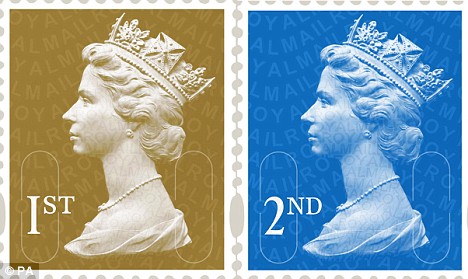
Before I start making the stamps,  it would be a good idea to know how stamps have been arranged in terms of layout in previous iterations. I've noticed that with a prominent queens head, there's no silhouette. With a silhouette accompanying a stylised image, the value, e.g. "1st" is in the top right. Sometimes the silhouette is even on the left hand corner, as long as it faces the artwork - as the RSA brief mentioned.


Read More
Posted in OUGD406, Stamp it | No comments

SHEPARD FAIREY VISUAL STYLE

Posted on 11:50 by cena
I've been quite inspired by Shepard Fairey's visual approach and stencil like visual style. Also his social commentary is really interesting and visually, as we're aiming it towards a younger generation who are stamp collectors - it needs to be something they'd want to collect. Chances are that they'll be more likely to collect a stamp which is aesthetically pleasing/memorable/breaking from the norm.


Bayshore Billboard - OBEY GIANT


How it would work at about stamp size. I think the text and the images are fairy legible and understandably, a point size about the same as the one used for the main headline here is pretty suitable for a stamp.


Similar ironic tag-lines to how i've been using. Maybe I can use different tag-lines for each one as "These sunsets are to die for!" is probably more ironic than "Clear skies are so last century!"

Around stamp size.


Read More
Posted in OUGD406, Stamp it | No comments

Stamp It! Research

Posted on 11:26 by cena
I'm exploring the idea of ironic postcards with tag-lines such as "Wish you were here!" while the actual scene itself isn't a very pleasant scene. I'm aware I must have subconsciously be inspired by existing examples of these somehow, or else I wouldn't have thought of this. So I'm going to look into visual examples of said inspirations and hopefully i'll take something away from it.

I'll also look into innovative stamp design I can find. Right now my ideas don't have a lot of focus and I need to find focus.

Olly Moss//Studio Ghibli

This kind of style of layers would be quite cool for stamps and one I've been applying to my design sheets, it still needs some refinement but I like the idea of taking a scene like this which you expect to be quite pleasant, with hills and birds etc but putting the reality in there. Car pollution, chimneys, power plants etc.


The tone of voice in this is really good, it's simple to understand and lighthearted. Im trying to think of a way to apply this to stamps maybe.


One colour stamps are really cool, I think it also adds an aura of being environmentally friendly. Less ink usage. I'll try drawing up my stamp designs just using up one colour, maybe even print it onto see through vinyl as I was planning, so the envelope actually paints the background. That would be quite interesting.


http://graphic-exchange.com/archives/home_2012_03_01.html


http://www.flickr.com/photos/davidmcfarline/2493253512/in/faves-777trebleseven/


http://wordsandeggs.squarespace.com/imported-20100206003717/2010/7/7/postage-stamp-designs.html


http://nevercontent.net/2011/100days/


Read More
Posted in OUGD406, Stamp it | No comments

NOTES ON 'AN INCONVENIENT TRUTH'

Posted on 09:15 by cena
Watched 'An Inconvenient Truth' directed by Davis Guggenheim and presented by Al Gore,  last night and finished it just now. I wanted to get a better idea and facts about carbon emissions/global warming and what kind of world we're headed towards. I think it was quite helpful in that respect. Some notes I made:


  • Deforestation
  • Increased heat waves/tropical storms/avalanches/typhoons/hurricans
  • Heatwaves/deaths
  • Polar bears and arctic animal suffering because of polar ice caps melting and distances they have to swim for ice to leverage onto.
  • America is biggest contributor to global warming followed by EU
  • America averages 5.6 tons of carbon emissions per person
  • EU averages 2.4 tons of carbon emissions per person
  • 5.47 billion metric tons of carbon emissions per country.
  • "If a frog jumps into a bowl of boiling water, he senses the danger and jumps right out. If it jumps into lukewarm water, where you slowly turn it up, it'll just stay there as the temperature goes up. Until it's rescued!"
  • Connecting the dots more quickly, before you realise it's too late.
  • Out of 928 articles, zero disagreed that with the consensus that global consensus that greenhouse gases pollution has caused most of the warming of the last 50 years.
  • "Repositioning global warming as theory. Rather than fact." MORE DOCTORS SMOKE CAMELS THAN ANY OTHER CIGARETTE

  • I don't think I want to scare too much, I want it to be placed in an ironic kind of commentary manner. In the same vain as The Simpson's like cartoon that was in An Inconvenient Truth
"NONE LIKE IT HOT!"

  • US is lagging behind the rest of the world, especially the far east when it comes to building fuel efficient and low impact transport such as cars.
  • "Humanity already possesses the fundamental scientific, technical and industrial know how to solve the carbon and climate problems..." - Stephen Pacala and Robert Socolow. 2004.
  • Use more efficient electricity appliances.
  • Stamp below a stamp?
  • Scenario and solution underneath it?
  • The 10 hottest years on record have happened in the last 14 years
  • http://www.climatecrisis.net
  • Reducing your carbon emissions
  • Buy energy efficiently appliances and lightbulbs
  • Change your thermostat (and use clock thermostats) to reduce energy for heating and cooling.
HEAT WAVES

2003 heat wave in Europe, deaths:
France 15,000
Holland 1,400
Portugal 13,000
Italy 20,000
UK 900
Spain 100

  • Increase in ocean temperatures from 1960's onwards
  • stronger storms > Hurrican Katrina
  • First ever hurricane in South Atlantic - Brazil 2004 March

DIFFERENCES
Mount Kilimanjaro 1970 - 2000
Within the decade, there will be no more snow in Kilimanjaro

Glacier National Park - 1910 - 1988

Italian alps - then - now

Switzerland - then - now

South America 15 years ago - now


CHANGE


  • Increase insulation
  • Recycle
  • Buy a hybrid car
  • When you can, walk or ride a bicycle
  • Where you can, use light rail and mass transit
  • Switch to renewable sources of energy
  • Plant trees, lots of trees.
  • Learn as much as you can about the climate crisis. Then put your knowledge into action.
Glaciers breaking.
Read More
Posted in OUGD406, Stamp it | No comments

Monday, 19 March 2012

One Degree Matters

Posted on 10:20 by cena
Source

Vimeo: http://vimeo.com/8119882

<iframe src="http://player.vimeo.com/video/8119882?title=0&amp;byline=0&amp;portrait=0" width="400" height="225" frameborder="0" webkitAllowFullScreen mozallowfullscreen allowFullScreen></iframe><p><a href="http://vimeo.com/8119882">One degree matters — Full movie</a> from <a href="http://vimeo.com/user2742751">European Environment Agency</a> on <a href="http://vimeo.com">Vimeo</a>.</p>


One degree warmer sounds like nothing, and if you’re in New York or Copenhagen or anywhere where its winter now, it sounds absolutely pathetic. One? Turn that global warmer up by eleven, carbon-spewing industrial sources!
But a new film, One Degree Matters, which had its premiere on Sunday during the Copenhagen climate change conference, explains why, well, one degree matters. And not in a good way.
The film’s what An Inconvenient Truth would have been if Al Gore were Scandanavian. The day after its premiere, Gore spoke at the Copenhagen climate change summit about the implications of a failure to prevent climate change. He may have gotten hammered on his claim that the arctic ice could be gone in 7 years, but no one disputes the evidence that the arctic is melting, and fast. While average global temperatures have increased by 1.3F in the past century, the mercury has risen at least twice as quickly in the Arctic, where thick year-round ice has given way to thin seasonal ice. In the summer of 2007, the Arctic ice cap dwindled to a record low minimum extent of 1.7 million square miles in September. The melting in 2008 and 2009 was not as extensive, but still ranked as the second and third greatest decreases on record. While melting arctic ice won’t raise sea levels, it will mean the loss of the reflective effect it provides, sending the suns rays back into space.
Given the current proposals of individual countries for their own actions to fight climate change, temperature is expected to increase approximately 6.8F by the end of the century, say scientists. To keep global warming from unleashing total havoc on our planet, we need to keep temperature rise under 2 degrees C. But this week the African nations have started to demand that that figure be adjusted. Lumumba Di-Aping, the Sudanese chairman of the group of 132 developing countries said recently, “Two degrees is a certain death for Africa.”
“There is unequivocal support for Africa,” was how Artur Runge-Metzger, the European Commission negotiator, retorted. “Of course, Ambassador Lumumba is not part of that because he lives in New York, but those people that live in Africa know the intention of the EU.”
Whatever that intention is, at least Europe knows what could happen if no one acts upon it.
The entire film, produced by the European Environment Agency, is viewable above.
Read More
Posted in OUGD406, Stamp it | No comments

Investigating Global Warming's Absolute Worst-Case Scenario, Venus Syndrome

Posted on 10:18 by cena
Source:


When we think of global warming, we think of things really sucking: rising oceans, catostrophic new weather patterns, disrupted food supply chains, Alaskan beach resorts. It’s all awful and very likely to happen, for global warming to hit its current worst case scenario. Because people are still pretty much idiots. Civilizations will reach concensus about climate change and science maybe actually being right about this too late to fix anything and. . . it’ll suck. You, or at least your offspring, will wind up a coastal refugee suffering through alternating droughts and epic, hand-of-god hurricane seasons. Meanwhile, the changing climate will cause a massive redistribution of food and water resources, leading to sustained global war. It’ll be brutal, but it won’t be as bad as the true worst case sceneario: runaway global warming, e.g. Venus syndrome.
Venus syndrome refers to the speculated early history of Venus, where trapped greenhouse gases created a positive feedback loop eventually boiling away the planet’s oceans and leaving it a miasmic 460°C hell featuring an almost entirely carbon dioxide atmosphere with a sheet of sulfur dioxide clouds on top. In terms of future inhabtability and life in general, Venus syndrome would be a bit more like sustained global nuclear war than much of what we imagine happening in our current climate change scheme.
Yesterday, Colin Goldblatt at the University of Victoria in Canada and Andrew Watson at the University of East Anglia in the UK, published a paper at the arXiv.com pre-print clearinghouse — via the brave arxiv.com crawlers at Technology Review — reassuring that runaway global warming is probably not going to happen on Earth. “The good news is that almost all lines of evidence lead us to believe that is unlikely to be possible, even in principle, to trigger full a runaway greenhouse by addition of non-condensible greenhouse gases such as carbon dioxide to the atmosphere,” they write.
But, at the same time, we can’t rule it out because we don’t totally know “the dynamics, thermodynamics, radiative transfer and cloud physics of hot and steamy atmospheres.” We have a lot of climate science as it pertains to global warming nailed to the wall, but the relationships that could lead to something like Venus syndrome on Earth aren’t very well known. We need more information.
The worry is that increasing water vapor from heating oceans will heat the atmosphere even more, leading to more evaporation in a positive feedback loop. As the atmosphere gets more and more swampy, the less thermal radiation it can emit into space. The less radiation it can emit, the warmer the planet gets and the more the oceans evaporate, making things yet warmer still while, at the same time, weakening the planet’s ability to cool itself.
So maybe you’re thinking that this all stops when the ice caps melt and cool off the oceans or we decide to stop polluting but, no, it’s too late. The cycle continues until we cook the atmosphere to 1400°C, at which point heat can radiate away at wavelengths not blockable by water vapor. In any case, that’s hot enough to boil away the oceans and we’ll all be dead. And then some aliens will find Earth some years later and wonder just what in the hell happened. A couple of alien scientists will publish a paper to a website that will get largely ignored, wondering if what happened on Earth could happen to their planet. And so on.
There are solutions. In the case of runaway global warming, we could build giant reflective shields to act as a kind of global sunblock, or maybe we could even screw around with Earth’s orbit, pushing the planet into cooler territory. In any case, it may be of some comfort that all of this boiling and roasting is going to happen on Earth anyhow in a couple million years when the sun naturally gets brighter.

Read More
Posted in OUGD406, Stamp it | No comments

What will global warming do to the future?

Posted on 10:15 by cena
Source: 


3.1 What are the projected changes in temperature for the 21st century?

Modeled temperature projection to 2100
According to a series of emission scenarios, global temperature is projected to increase by about 0.2°C per decade for the next two decades. Previous projections had suggested a warming of 0.15 to 0.3°C per decade for 1990 to 2005.
Even if the concentrations of all greenhouse gases and aerosols had been kept constant at year 2000 levels, a further warming of about 0.1°C per decade would be expected, mainly due to the long time it takes for oceans to release the heat they accumulated. Continued greenhouse gas emissions at or above current rates would cause further warming and induce many changes in the global climate system during the 21st century that would very likely be larger than those observed during the 20thcentury. In addition, warming tends to reduce land and ocean uptake of atmospheric CO2, increasing the amount of human-induced emissions that remains in the atmosphere
Best estimates for globally average surface air warming between the 1980s and the 2090s in the selected scenarios range from 1.8°C (likely range is 1.1°C to 2.9°C) to 4.0°C (likely range is 2.4°C to 6.4°C). Uncertainties are related to model differences and to differences in energy use scen


3.2 What are the other projected changes for the 21st century?

Projected temperatures up to 2100
Global average sea level is projected to rise by 18 to 59 cm by the end of the 21st century (2090-2099), depending on the scenario (Table 3). However, models used to date do not include uncertainties about certain climate mechanisms because of lack of knowledge. For instance, projections of sea level rise do not take into account the fact that the flow of ice from the ice sheets in Greenland and Antarctica could be faster in the future than they were in recent years. These changes could increase the projections by 10 to 20 cm, maybe even more, but understanding is still too limited to include them in the models with any level of certainty.
Geographical patterns in climate changes are expected to remain similar to those observed over the past several decades. Warming is expected to be greatest over land and at most high northern latitudes, and smallest over the Southern Ocean and parts of the North Atlantic Ocean.
Other projected changes include:
Relative changes in precipitation
Relative changes in precipitation (in percent) for the period 2090–2099, relative to 1980–1999
  • increased acidification of the oceans caused by increasing carbon dioxide concentrations in theatmosphere;
  • shrinking snow cover and sea ice, and decreasedpermafrost;
  • increasingly frequent hot extremes, heat waves, and heavy precipitation events  
  • more intense tropical cyclones (typhoons and hurricanes);
  • a moving of extra-tropical storm tracks towards the poles, with consequent changes in wind, precipitation, and temperature patterns; 
  • greater amounts of precipitation in high-latitudes and less rain in most subtropical land regions; and
  • a slowing of the Atlantic Ocean circulation.

3.3 What changes are projected on the longer term?

Temperatures are projected to increase by 1.8°C to          4.0°C.
From 1980 to the end of the 21st century, temperatures are projected to increase by 1.8°C to 4.0°C.
Warming and sea level rise caused by human activities will continue for centuries, even if greenhouse gas concentrations were to be stabilized, because of the long timescales associated with climate processes andfeedbacks.
Warming is expected to affect the carbon cycle, resulting in even highercarbon dioxide concentration in the atmosphere, but the magnitude of this is uncertain.
If greenhouse gas concentrations in the atmosphere were to stabilize in 2100 at levels projected in the B1 and A1B emission scenarios, a further increase in global average temperature of about 0.5°C would still be expected around 2200. Under this A1B scenario, the thermal expansion of the oceans alone would lead to an increase of 30 to 80 cm of global sea level by 2300, and this rise would continue over many centuries after that.
The melting of the Greenland ice sheet is projected to continue and to contribute to sea level rise after 2100. If it were to keep melting for millennia until Greenland ice disappeared completely, global sea level would rise by about 7m.
The vulnerability of the ice sheets to warming could be increased by dynamical processes related to ice flow (not included in current models but suggested by recent observations) thereby increasing future sea level rise. Current global model studies project that the Antarctic ice sheet will remain too cold for widespread surface melting and is expected to gain in mass due to increased snowfall.


3. How is the climate going to change in the future?

Temperatures are projected to increase by 1.8°C to 4.0°C.
From 1980 to the end of the 21st century, temperatures are projected to increase by 1.8°C to 4.0°C.
3.1 The global average temperature is expected to increase by about 0.2°C per decade over the next two decades. Continuing greenhouse gasemissions at or above current rates would cause a further increase in global temperatures and many other climatic changes during the 21st century.
The best estimates for projected global temperature increases from the 1980s to the end of the 21st century range from 1.8°C (1.1 - 2.9°C) to 4°C (2.4 - 6.4°C) for the IPCC scenarios that do not consider additional mitigation measures apart from those already in place in 2000. More...
3.2 Global average sea level is expected to rise by 18 to 59 cm by the end of the 21st century. Warming is expected to be greatest over land and at high northern latitudes and smallest over the Southern Ocean and parts of the North Atlantic Ocean.  Other projected changes include acidification of the oceans, reduced snow cover and sea ice, more frequent heat waves and heavy precipitation, more intense tropical cyclones, and slower oceanic currents. More...
3.3 Warming and sea level rise caused by human activities will continue for centuries, even ifgreenhouse gas concentrations were to be stabilized. If warming persists over many centuries, it could lead to a complete melting of the Greenland Ice sheet, increasing global sea levels by about 7m. More...

Read More
Posted in OUGD406, Stamp it | No comments

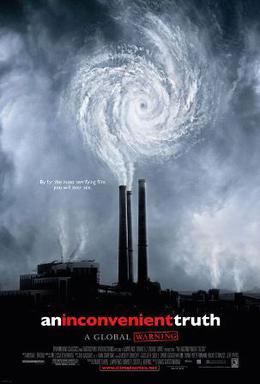
An Inconvenient Truth

Posted on 10:08 by cena

Link to movie: http://video.google.com/videoplay?docid=8847562857479496579

^ really like the visuals, I've had stamps with these kind of visuals in mind. Stamps that give you an inconvenient truth. What the world is heading towards. Might be a good shout to watch this.


From director Davis Guggenheim, An Inconvenient Truth is a passionate and inspirational look at former Vice President Al Gore's fervent crusade to halt global warming's deadly progress by exposing the myths and misconceptions that surround it. In this intimate portrait of Gore and his "travelling global warming show," Gore comes across as never before in the media - funny, engaging, open and intent on alerting citizens to this "planetary emergency" before it's too late.

Interspersed with the bracing facts and future predictions is the story of Gore's personal journey: from an idealistic college student who first saw a massive environmental crisis looming; to a young Senator facing a harrowing family tragedy that altered his perspective; to the man who almost became President but instead returned to the most important cause of his life. With an emphasis on hope, An Inconvenient Truth ultimately shows us that global warming is no longer a political issue but rather, the biggest moral challenge facing our civilization today. 

After having its U.S. debut at the 2006 Sundance Film Festival and international premiere at Cannes, An Inconvenient Truth opened to rave reviews and enthusiastic audiences everywhere. A smash hit, the film went on to win Academy Awards® for Best Documentary feature and Best Song. It also became a global phenomenon, one of the highest grossing documentaries of all time with a worldwide audience estimated at 5 million people


Source Wikipedia:

An Inconvenient Truth is a 2006 documentary film directed by Davis Guggenheim about former United States Vice President Al Gore's campaign to educate citizens about global warming via a comprehensive slide show that, by his own estimate made in the film, he has given more than a thousand times.
Premiering at the 2006 Sundance Film Festival and opening in New York City and Los Angeles on May 24, 2006, the documentary was a critical and box-office success, winning 2 Academy Awards for Best Documentary Feature and Best Original Song.[4] The film earned $49 million at the box office worldwide, becoming the sixth-highest-grossing documentary film to date in the United States.[5]
The idea to document his efforts came from producer Laurie David who saw his presentation at a town-hall meeting on global warming which coincided with the opening of The Day After Tomorrow. David was so inspired by Gore's slide show that she, with producer Lawrence Bender, met with Guggenheim to adapt the presentation into a film.
Since the film's release, An Inconvenient Truth has been credited for raising international public awareness of climate change and reenergizing the environmental movement. The documentary has also been included in science curricula in schools around the world, which has spurred some controversy.
An Inconvenient Truth focuses on Al Gore and on his travels in support of his efforts to educate the public about the severity of the climate crisis. Gore says, "I've been trying to tell this story for a long time and I feel as if I've failed to get the message across."[6] The film documents a Keynote presentation (which Gore refers to as "the slide show") that Gore has presented throughout the world. It intersperses Gore's exploration of data and predictions regarding climate change and its potential for disaster with his own life story.
The former vice president opens the film by greeting an audience with a joke: "I am Al Gore; I used to be the next President of the United States."[7] Gore then begins his slide show on climate change; a comprehensive presentation replete with detailed graphs, flow charts and stark visuals. Gore shows off several majestic photographs of the Earth taken from multiple space missions, Earthrise and The Blue Marble.[8] Gore notes that these photos dramatically transformed the way we see the Earth, helping spark modern environmentalism.
Following this, Gore shares anecdotes that inspired his interest in the issue, including his college education with early climate expert Roger Revelle at Harvard University, his sister's death from lung cancer and his young son's near-fatal car accident. Gore recalls a story from his grade-school years, where a fellow student asked his geography teacher about continental drift; in response, the teacher called the concept the "most ridiculous thing [he'd] ever heard." Gore ties this conclusion to the assumption that "the Earth is so big, we can't possibly have any lasting, harmful impact on the Earth's environment." For comic effect, Gore uses a clip from the Futurama episode "Crimes of the Hot" to describe the greenhouse effect. Gore refers to his loss to George W. Bush in the2000 United States presidential election as a "hard blow" yet one which subsequently "brought into clear focus, the mission [he] had been pursuing for all these years."
A tiny, pale blue dot is contrasted against the vastness of space
The Pale Blue Dot, a Voyager 1 photo showing Earth (circled) as a single pixel from 4 billion miles (6.4 billion kilometres) away, is featured in the film. Al Gore points out that all of human history has happened on that tiny pixel, which is our only home.
Throughout the movie, Gore discusses the scientific opinion on climate change, as well as the present and future effects of global warmingand stresses that climate change "is really not a political issue, so much as a moral one", describing the consequences he believes global climate change will produce if the amount of human-generated greenhouse gases is not significantly reduced in the very near future. Gore also presents Antarctic ice coring data showing CO2 levels higher now than in the past 650,000 years.
The film includes segments intended to refute critics who say that global warming is unproven or that warming will be insignificant. For example, Gore discusses the possibility of the collapse of a major ice sheet in Greenland or in West Antarctica, either of which could raise global sea levels by approximately 20 feet, flooding coastal areas and producing 100 million refugees. Melt water from Greenland, because of its lower salinity, could then halt the currents that keep northern Europe warm and quickly trigger dramatic local cooling there. It also contains various short animated projections of what could happen to different animals more vulnerable to climate change.
The documentary ends with Gore arguing that if appropriate actions are taken soon, the effects of global warming can be successfully reversed by releasing less CO2 and planting more vegetation to consume existing CO2. Gore calls upon his viewers to learn how they can help him in these efforts. Gore concludes the film by saying:
"Each one of us is a cause of global warming, but each one of us can make choices to change that with the things we buy, the electricity we use, the cars we drive; we can make choices to bring our individual carbon emissions to zero. The solutions are in our hands, we just have to have the determination to make it happen. We have everything that we need to reduce carbon emissions, everything but political will. But in America, the will to act is a renewable resource."[9]
During the film's end credits, a diaporama pops up on screen suggesting to viewers things at home they can do to combat climate change, including "recycle", "speak up in your community", "try to buy a hybrid vehicle" and "encourage everyone you know to watch this movie."[10]
Gore's book of the same title was published concurrently with the theatrical release of the documentary. The book contains additional information, scientific analysis, and Gore's commentary on the issues presented in the documentary.[11] A 2007 documentary entitled An Update with Former Vice President Al Gore features Gore discussing additional information that came to light after the film was completed, such as Hurricane Katrina, coral reef depletion, glacial earthquake activity on the Greenland ice sheet, wildfires, and trapped methane gas release associated with permafrost melting.[12]


Read More
Posted in OUGD406, Stamp it | No comments
Older Posts Home
Subscribe to: Posts (Atom)

Popular Posts

  • TED: Creating Your Logo
    Source:  http://www.ted.com/pages/creating_your_tedx_logo Cool to see what typefaces, spot colours etc organisations use for their logos. //...
  • Graphic Design is Good For Your Health
    Following on from my dissertation and some of the conclusions and aims I applied towards my physical resolution - this article has been real...
  • Morihei Ushiba - The Art of Peace
    I've ordered The Art Of Peace by Morihei Ushiba , it's a philosophy book on Bushido and Martial Arts philisophy by a legendary Aiki...
  • Woodblock printing - Notes/Process/Formats
    My notes: Used to print books before movable type Moku hanga technique differs in that it uses water-based inks Water-based inks provide gre...
  • Foil Blocking & Spot Varnish examples
    I've been looking for examples of different print techniques to see examples of how, for example in this case, foil blocking and spot va...
  • Process : Embossing
    As part of my research into basic definitions of different finishing processes I'm now looking into embossing, how it's done and the...
  • Jessica Svendsen : 100 Days : Müller-Brockmann
    Jessica Svendsen is now a designer at Pentagram, under the tutelage of Michael Beirut. Michael Beirut runs the 100 days workshop where you b...
  • Bushido Quotes
    Here are really interesting Bushido quotes which reflect "The Way Of The Warrior" in martial arts and particularly Samurai culture...
  • Tokyo World Design Conference _ 1960
    Tokyo World Design  Conference                 1960                            As I'm now still keeping a close eye on the development o...
  • List of Illustrations - Practical (Wimbledon) & Pre-Practical Body of Work
    List of Illustrations – Primary Practical (Wimbledon ) Emirates247 {2012) ‘Novak Djokovic Australian Open 2012’ [Image Online] Available at:...

Categories

  • 100 Things
  • Alphabet Soup
  • Collect/Categorise/Communicate
  • Colour Theory
  • Communication Is A Virus
  • Context of practice
  • Cop3
  • Crit Techniques
  • Design For Print
  • Design for Web
  • END OF MODULE EVALUATION
  • Essay notes
  • How To Be A Best Man
  • How To Buy A Diamond Engagement Ring
  • illustrator
  • It's Your Choice
  • Lecture notes
  • Level 05 Essay
  • Level 05 Publication
  • Love/Hate
  • My Red Book
  • OUGD01
  • OUGD401
  • OUGD402
  • OUGD403
  • OUGD404
  • OUGD405
  • OUGD406
  • OUGD501
  • OUGD502
  • OUGD503
  • OUGD504
  • OUGD505
  • OUGD601
  • Personal
  • Photoshop brief
  • Proverb
  • Psychoanalysis
  • Publication
  • Room For Sale Poster
  • Stamp it
  • Study Task 1
  • Study Task 2
  • Study Task 3
  • Study Task 5
  • Task
  • Task 1
  • The Poster Brief
  • THREE
  • Typo-Gateaux
  • Typography
  • What Is A Line

Blog Archive

  • ▼  2014 (21)
    • ▼  March (1)
      • Graphic Design is Good For Your Health
    • ►  January (20)
  • ►  2013 (105)
    • ►  December (8)
    • ►  November (7)
    • ►  October (6)
    • ►  September (30)
    • ►  July (1)
    • ►  June (1)
    • ►  May (13)
    • ►  April (10)
    • ►  March (5)
    • ►  February (20)
    • ►  January (4)
  • ►  2012 (228)
    • ►  December (18)
    • ►  November (41)
    • ►  October (23)
    • ►  September (1)
    • ►  May (38)
    • ►  April (18)
    • ►  March (45)
    • ►  February (23)
    • ►  January (21)
  • ►  2011 (83)
    • ►  December (18)
    • ►  November (37)
    • ►  October (19)
    • ►  September (9)
Powered by Blogger.

About Me

cena
View my complete profile